
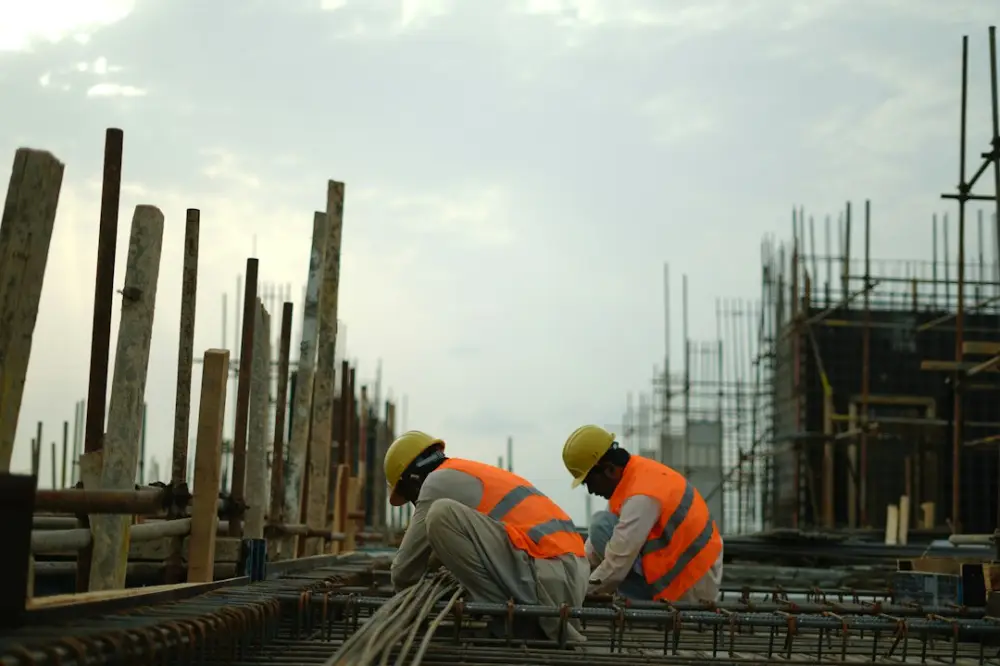
Effective fire safety on a construction site requires more than just placing a few extinguishers near the exit. In 2026, the complexity of modern building materials, coupled with high-density urban development, means that site coordinators must treat fire prevention as a dynamic part of the daily workflow. A fire on a construction site can spread with alarming speed, often because the structural fire protection designed for the finished building is not yet in place. This creates a unique set of risks that demand constant vigilance and a high level of technical knowledge from the management team.
Coordinating fire safety involves a combination of engineering controls, administrative procedures, and behavioral standards. Every subcontractor, from the electrician to the dry liner, plays a role in maintaining the integrity of the site’s fire plan. This article provides general information and does not constitute professional safety or legal advice. By understanding the specific mechanics of fire development in unfinished structures, site managers can implement more robust systems that protect both the workforce and the financial viability of the project.
Evaluating Site Specific Fire Hazards and Fuel Loads
The first step in any fire safety strategy is a detailed assessment of the fuel load present on-site. Construction environments are inherently cluttered with combustible materials such as timber, packaging, insulation, and flammable liquids. In the early stages of a build, these materials are often stored in bulk, creating significant fire loads in areas where ignition sources are also prevalent. Managing these hazards requires a strict regime of housekeeping and material segregation.
Waste management is a primary concern. Piles of timber offcuts, discarded cardboard, and plastic wrapping are prime targets for accidental ignition. Site coordinators should implement a policy where waste is cleared at the end of every shift and stored in metal skips located at least six meters away from the building envelope. Additionally, the storage of highly flammable substances like LPG cylinders or thinners must be restricted to designated, ventilated areas with appropriate signage and secondary containment. Reducing the density of combustible materials in any one area significantly lowers the potential for a small fire to escalate into a site-wide catastrophe.
The Mechanics of Temporary Fire Compartmentation
In a finished building, fire is contained by walls, floors, and fire-rated doors. During construction, these compartments are often breached by service risers, stairwells, and unfinished partitions. This allows smoke and flames to travel vertically and horizontally through the building with almost no resistance. To combat this, coordinators must focus on temporary compartmentation strategies that evolve as the build progresses.
Temporary fire curtains and fire-rated plywood partitions can be used to seal off completed sections of a floor from ongoing high-risk activities. It is also essential to ensure that permanent fire-stopping is installed as early as possible in the construction sequence. Leaving service penetrations open for weeks after pipes or cables have been installed is a common oversight that can lead to rapid fire spread. By prioritizing the installation of fire dampers and intumescent seals, the site team can restore some level of structural protection even while the fit-out continues.
Professional Development and Regulatory Compliance
The regulatory landscape for fire safety has become increasingly stringent, placing more responsibility on the individual designated as the 'responsible person' on-site. This individual must possess a deep understanding of fire physics, risk assessment methodology, and the legal requirements set out in current building safety legislation. Without formal training, it is difficult to navigate the complexities of modern fire safety standards.
While practical experience is vital, many site coordinators pursue formal certification to deepen their technical understanding of building regulations and fire physics. Enrolling in a Nebosh fire safety certificate allows a professional to bridge the gap between simple site rules and a comprehensive safety management system. This level of training ensures that the site manager can not only identify hazards but also design and implement the technical controls necessary to mitigate them. It also provides the confidence needed to lead fire marshals and conduct effective fire drills that reflect the changing layout of a live project.
Managing Hot Works and Ignition Sources
Hot works, including welding, grinding, and the use of blowtorches, remain the leading cause of fires on construction sites. Controlling these activities requires a robust permit-to-work system that is never treated as a mere paper exercise. A permit should only be issued after a physical inspection of the work area has been conducted by a competent supervisor. This inspection must verify that all combustibles have been removed or shielded with fire-resistant blankets and that appropriate extinguishing equipment is immediately at hand.
One of the most critical components of hot work management is the post-work fire watch. Many fires start as a slow-burning ember that remains undetected for hours after the work has finished. A dedicated fire watch should remain in the area for at least 60 minutes after the hot work is completed, with a subsequent check performed two hours later. In 2026, many sites are also utilizing thermal imaging cameras during these checks to identify hotspots behind partitions or inside ceiling voids that might not be visible to the naked eye.
Logistics of Emergency Response and Site Access
An emergency plan is only effective if it can be executed under pressure. As the site layout changes, the evacuation routes and assembly points must be updated and communicated to all personnel. This is particularly challenging on high-rise projects where the primary means of escape may be a temporary hoist or an unfinished stairwell. Site coordinators must ensure that escape routes are clearly marked with photoluminescent signage and kept free of all obstructions at all times.
Coordination with local fire and rescue services is also paramount. They should be provided with up-to-date site plans that show access points, water supplies, and the location of high-risk hazards like chemical stores or heavy machinery. On large-scale projects, it is beneficial to invite the fire service for a site walkthrough. This allows them to familiarize themselves with the site’s unique challenges, such as narrow access roads or the location of dry risers, ensuring that if an incident does occur, their response is as efficient as possible.
Technology Integration in Fire Detection and Alarms
The days of relying on a simple hand-bell or a standalone siren for fire alerts are largely over on professional sites. Modern construction projects utilize wireless fire detection and alarm systems that can be easily expanded as the building grows. These systems are essential because they provide instantaneous notification across the entire site, including basement levels and upper floors where workers might otherwise be isolated.
These wireless networks can be linked to heat and smoke detectors in high-risk areas, providing 24/7 monitoring even when the site is closed. Some systems also integrate with site access control, allowing managers to see exactly how many people are on-site and in which zones, which is invaluable data for the fire service during a roll-call. Regularly testing these alarms and ensuring that the signal strength remains consistent across all areas of the project is a fundamental task for the site coordination team. By leveraging this technology, managers can ensure that the 'time to detect' and 'time to evacuate' are kept to an absolute minimum.